Deutsch
ANG_RWK_DE_REV1
The RWK effectively removes organic residues from screenings while ensuring reliable dewatering. This reduces volume and weight, simplifies disposal, and enhances the operational reliability of downstream wastewater treatment units.

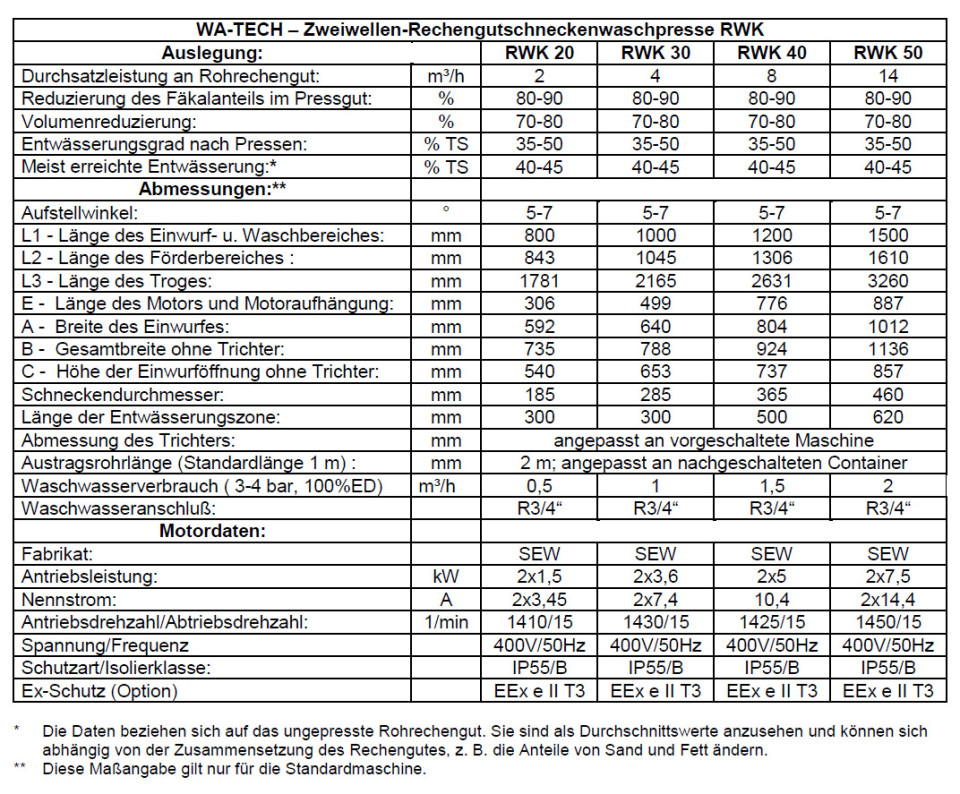
| Conveyor trough, support frame, cover: | see quotation |
| Mixing and conveying shafts: | Hardox + St 52-3 |
| Trough lining (conveying/pressing section): | Hardox (wear rails) |
| Trough lining (washing/infeed section): | PE 1000 (wear plates) |
| Shear pins: | Tempered steel |
| Drive shaft: | Steel |
| Water pipes: | Stainless steel 1.4571 |
| Connecting elements and moving parts (screws, nuts, pins, etc.): |
Stainless steel A4 |
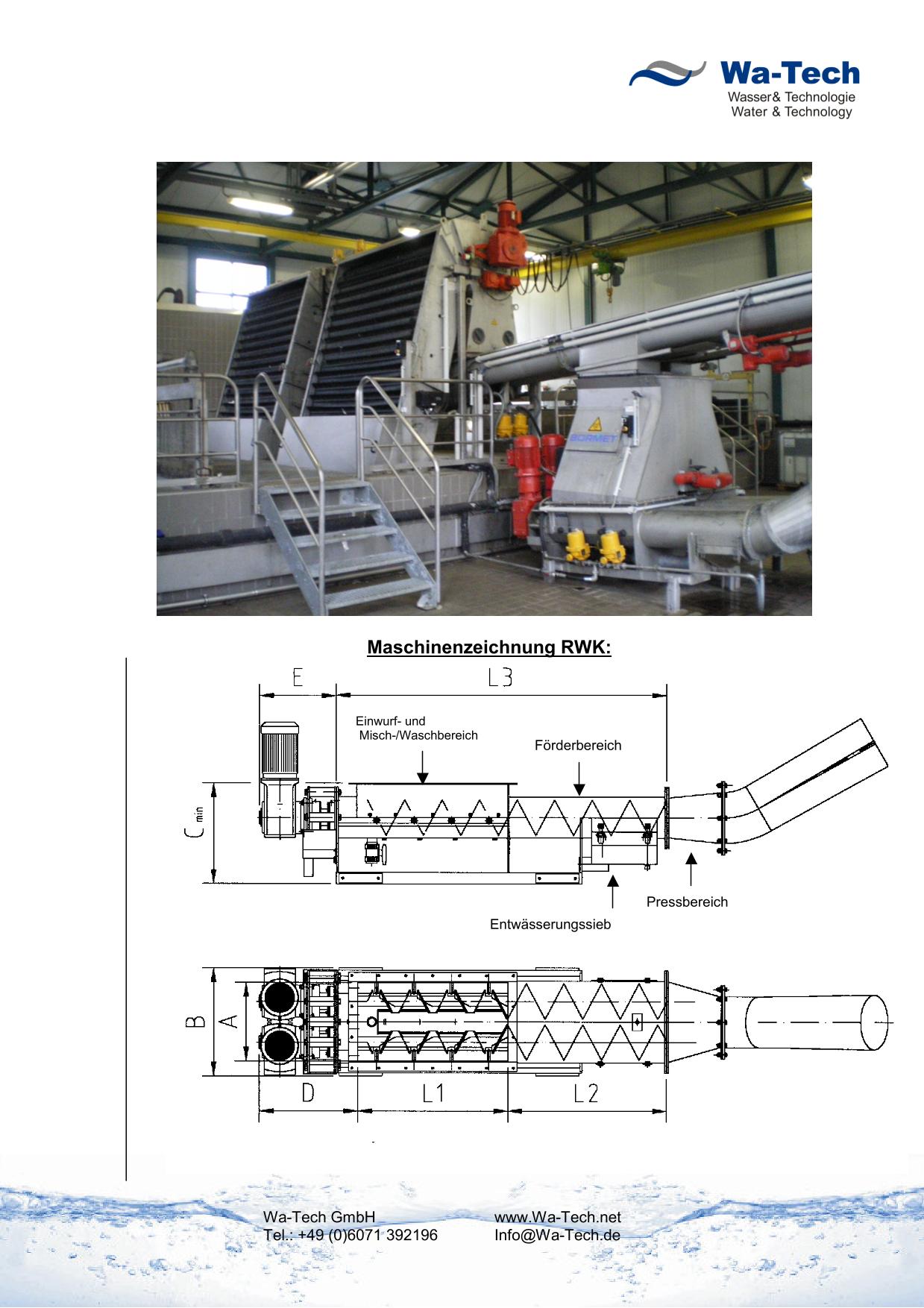
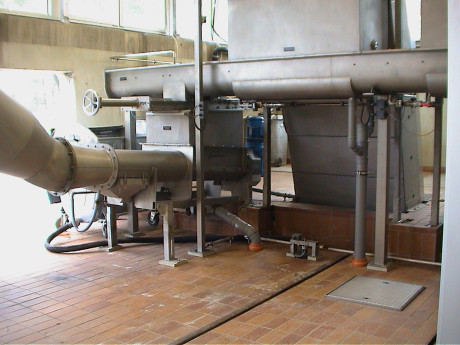
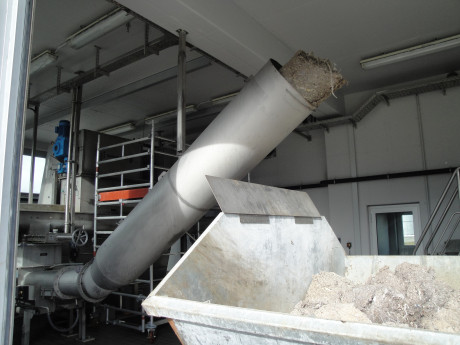
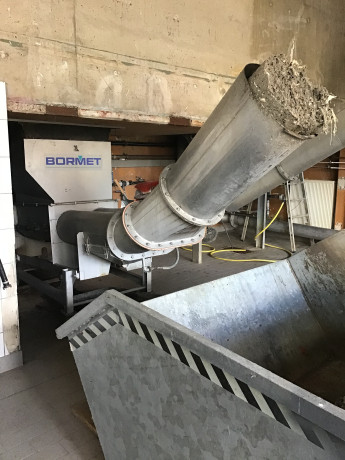
Screenings washing plant for the continuous washing of organic material from screenings, followed by compaction and dewatering of the inorganic fraction, with discharge to further conveying systems or collection containers.
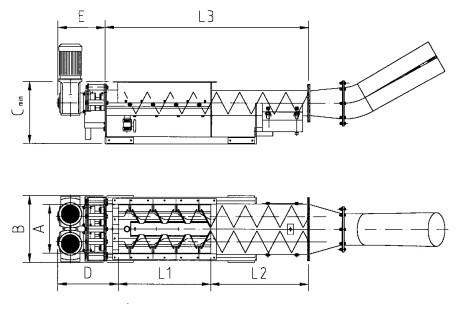
The washing takes place in a trough-shaped wash tank into which the pre-dewatered screenings are fed. In the inlet area, two mixing shafts with paddles rotate to break up and thoroughly mix the screenings. Each shaft is driven by a separate motor.
A water supply system is installed in the hopper. If the screenings are not sufficiently supplied with water, it adds wash water to ensure that loosened organic substances go into solution.
The mixing shafts transition continuously into conveying shafts beyond the inlet area, transporting the washed screenings out of the washing zone.
The wash water containing the dissolved organic matter flows through drainage screens located in the conveying section into a collection trough and is returned to the inflow.
The undissolved inorganic material is conveyed by the screw shafts into the downstream pressing zone and friction pipe. Here, as in a conventional screw press, compaction and dewatering of the remaining screenings occur due to the back pressure within the press pipe.
The resulting press water, which still contains organic substances, flows through the drainage screens into the collection trough and is also returned to the inflow.
Please contact us directly so that we can provide you with the requested documents and suitable accessories.